Luxury business names work best when they signal restraint, craft, and a clear point of view. The strongest choice is usually easy to pronounce, distinctive in its category, and credible on everything from a product label to an invoice. The ideas below are creative starting points; none should be treated as legally cleared or available.
What makes a name feel premium?
Luxury does not require a foreign word, a founder surname, or terms such as elite and royal. It comes from the relationship between the name and the complete offer. A quiet two-word name can feel premium when it is memorable, suitable for the category, and supported by excellent design and service.
Restraint
Short structures and controlled imagery often feel more assured than a stack of status words.
Specificity
A reference to material, place, craft, or atmosphere gives the name a world of its own.
Sound
Clear syllables, deliberate rhythm, and an easy stress pattern help people repeat the name.
Fit
The name should suit the product, price level, sales channel, and expectations of the customer.
48 luxury business name ideas by style
Use these as prompts for a naming direction rather than a final availability list. Change the roots, combine a meaningful place or material with a distinctive word, and test the result in your actual category.
Quiet and minimal
- Auren House
- Still & Form
- Vale Atelier
- North Ellery
- Ivory Fold
- Orlane Studio
- Arden Row
- Calder & Vale
Heritage and craft
- Hawthorne Guild
- Maison Alder
- Briar & Loom
- The Gilded Joinery
- Bellmont Works
- Ashbury Foundry
- Vellum & Oak
- Marrow & Pine
Modern and architectural
- Monument Line
- Alto Meridian
- Forme Noire
- Axis Aurea
- Atelier Slate
- Lucent Grid
- Oriel Standard
- Verre Studio
Soft and sensory
- Velvet Orchard
- Amber Veil
- Linen Reverie
- Sable Bloom
- Opaline Hour
- Silken Grove
- Moonlit Cedar
- Cashmere Tide
Jewelry and beauty
- Aurelle & Co.
- Élanora Studio
- Vesper Gem
- Selene Vault
- Atelier Lumi
- Orabel House
- Celestine Row
- Veloria Muse
Hospitality and lifestyle
- The Sable Table
- Aurelian Stay
- Maison Wren
- Cedar & Silk
- Velmont Reserve
- The Quiet Palm
- Arden Supper Club
- Oriel Retreats
Choose a naming route before choosing a word
| Route | Best when | Watch for |
|---|---|---|
| Founder or surname | The founder, craft tradition, or personal service is central. | Privacy, succession, pronunciation, and similarity to established names. |
| Place or landscape | Origin, setting, or local material is part of the story. | A place claim that is misleading or too narrow for expansion. |
| Material or craft | The product has a tangible making process. | Generic combinations that competitors can easily imitate. |
| Invented word | You want a compact, ownable verbal identity. | Spelling friction, unwanted meanings, and difficult pronunciation. |
| Evocative phrase | Mood and lifestyle matter more than a literal description. | A beautiful phrase that gives no clue about the category. |
If you need more raw directions, use a brand name generator to widen the list, then bring only the strongest candidates into the evaluation stage. For a broader process, see the business names guide.
Score a shortlist instead of debating taste
Reduce the long list to five or six names, then have decision-makers score the same criteria independently. This makes the trade-offs visible and prevents one attractive logo mockup from deciding the name too early.
| Criterion | Question | Suggested weight |
|---|---|---|
| Category fit | Does the name feel credible for what you sell and how you sell it? | 25% |
| Distinctiveness | Can customers separate it from nearby competitors? | 20% |
| Pronunciation | Can the intended audience say and repeat it after hearing it once? | 15% |
| Meaning | Does it avoid awkward meanings in important languages and markets? | 15% |
| Growth | Can it stretch to future products, locations, or services? | 10% |
| Practical checks | Is there a realistic path through entity, domain, and trademark screening? | 15% |
Use the weights as a starting point. A hotel group may give pronunciation and international meaning more weight. A small local atelier may care more about place, founder story, and state registration.
Test the name in real situations
- Say it aloud. Test introductions, phone calls, referrals, and voice search.
- Show it without a logo. Ask what people expect the business to sell and what price level they imagine.
- Put it on practical materials. Check an email address, shipping label, invoice, storefront, and social profile.
- Ask for recall later. A name that looks elegant but is forgotten ten minutes later has limited value.
- Check cultural meaning. Review pronunciation, transliteration, slang, and unwanted associations in priority markets.
Check availability before investing
A name can pass one check and fail another because business registration, DBAs, domains, and trademarks serve different purposes. The U.S. Small Business Administration explains these separate layers and notes that requirements depend on business structure and location.
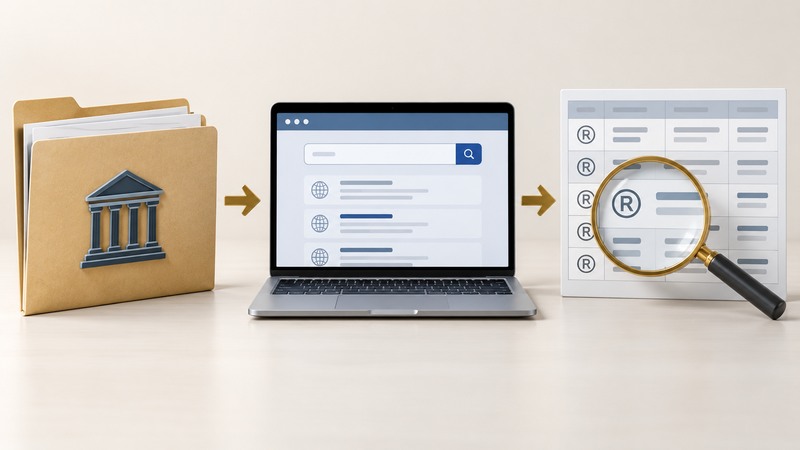
- Entity name: search the relevant state or national business registry and review its naming rules.
- DBA or trade name: check local requirements when the public-facing name differs from the legal entity name.
- Trademark: search similar wording and related goods or services, not only an exact spelling. The USPTO trademark search guidance is the official U.S. starting point.
- Domain: check the exact domain and sensible alternatives. ICANN Lookup provides current registration data for many domain names, but domain registration does not establish trademark clearance.
- Professional review: when the launch or rebrand carries substantial cost, ask a qualified trademark professional to assess the relevant market and jurisdiction.
Do these checks before ordering packaging, signs, uniforms, or a large advertising run. A creative shortlist is cheap to change; a launched identity is not.
Common luxury naming mistakes
- Using status words as a substitute for positioning. “Prestige,” “elite,” and “royal” are often less distinctive than a specific story.
- Borrowing a language carelessly. A word may be grammatically wrong, difficult to type, or culturally awkward.
- Designing the logo before testing the name. Attractive typography can hide weak pronunciation or poor recall.
- Copying the category leader’s pattern. Familiarity may feel safe, but it can make the new brand harder to distinguish.
- Assuming a free domain means a safe name. Domain, entity, DBA, and trademark checks remain separate.
Frequently asked questions
What makes a business name sound luxurious?
Luxury names usually feel deliberate, distinctive, easy to say, and consistent with the product, price, and customer experience. A polished name cannot compensate for a weak offer.
Should a luxury business name use French or Italian words?
Only when the word is accurate, pronounceable for the intended audience, and relevant to the brand story. Borrowed language can feel forced when it is used only as decoration.
Can I use a name from this list immediately?
No. The examples are creative starting points. Check entity-name rules, DBA requirements, domains, social handles, and relevant trademark records before using or investing in a name.
Does registering a domain protect the business name?
A domain registration reserves a web address under the registrar agreement. It does not by itself create entity-name or trademark rights.